How to Research a Small-Town Setting for Fiction
By Meg Anne Brighton · Published · Updated · 4 min read
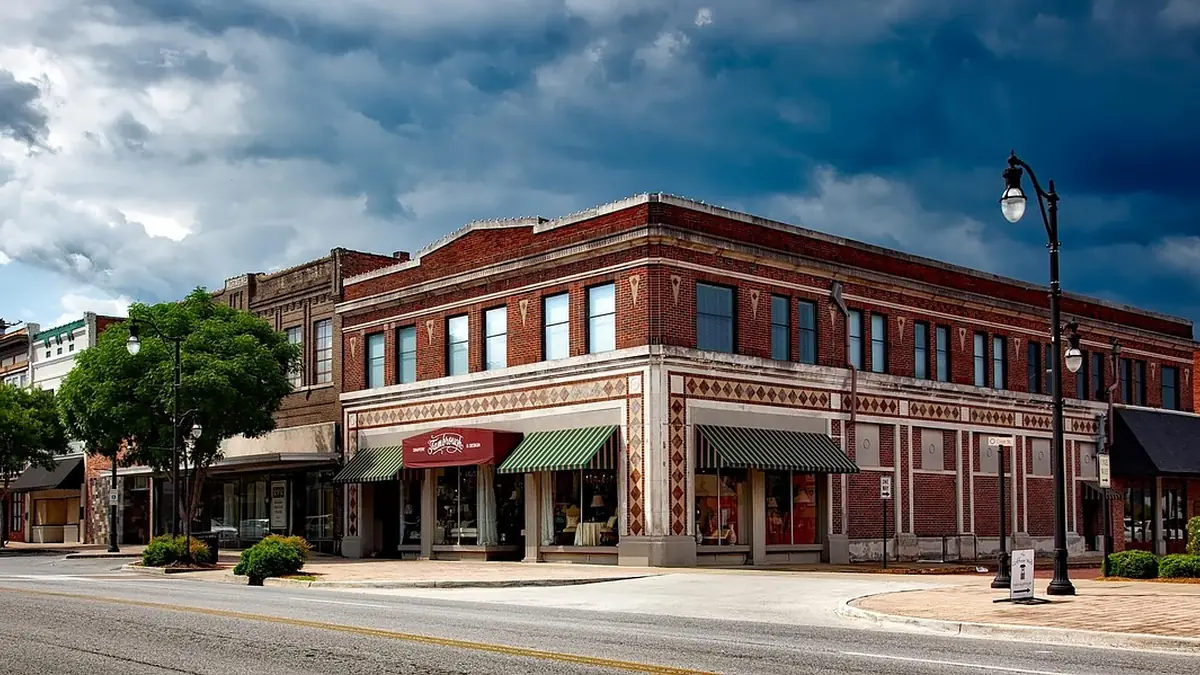
Small towns are easy to get wrong in ways readers notice immediately: the diner that closes at nine, the high school with a graduating class of 600, the sheriff who answers every call within four minutes. Authenticity comes from the accumulation of small, specific details, and most of those details are available to anyone with a library card and an internet connection.
This guide covers how to build a convincing small-town setting from your desk: where to find reliable facts, how to read local sources for texture, and how to convert research into prose that feels lived-in rather than checked off. Expect a few weeks of part-time work for a single town, not months.
Start with geography and population, not vibes
Before you write a single description, pin down the physical facts: population, county, distance to the nearest city, terrain, and the main road through town. Census data and county assessor records give you population, median household income, housing stock age, and commute times in about an hour. Those numbers shape everything else — a town of 1,400 has a different school system, hospital access, and social dynamic than one of 14,000.
Google Maps and satellite view are underused research tools. Street View lets you walk a main street, note the storefronts, read the church signs, and see where the grain elevator sits relative to the residential blocks. Look at parking angles, sidewalk width, and whether the downtown has awnings. These are the details readers picture when they imagine your town.
- Census and county records for population, income, housing age
- Google Street View for storefronts, signage, and street layout
- Distance to nearest hospital, Walmart, and interstate exit
- Terrain and weather patterns for the region
Read the local newspaper like a writer
A small-town weekly newspaper is the single richest source of setting detail you can find. Most publish online, and many leave archives open. Read six months of issues and you'll learn how people talk about each other, which businesses are struggling, what the school board argues about, and what counts as a scandal. A dispute over a stop sign can carry three issues.
Pay attention to the small ads and classifieds, the sheriff's log, and the letters to the editor. They reveal social fault lines, recurring characters, and the texture of daily life. Note the names of streets, creeks, and churches — local naming conventions are highly specific and easy to imitate once you've seen a dozen examples.
Mine public records for precision
Public records are free, fast, and give you facts that sound invented but aren't. Property tax records show who owns the old mill and what it's assessed at. Planning commission minutes show what's being built and who objected. School district budgets reveal how many students, teachers, and buses a town actually has.
Court dockets and police blotters, where published, show the rhythm of minor crime in a place: DUIs, trespassing, the occasional stolen tractor. Don't lift real cases or names — use the patterns to calibrate what your fictional town's law enforcement would realistically deal with in a week.
- Property tax and assessor databases
- Planning commission and city council minutes
- School district budgets and enrollment figures
- Published police blotters and court dockets
Listen to how people actually talk
Regional speech is where small-town dialogue lives or dies. Local radio stations, public library oral history projects, and university linguistics archives host recordings of real residents. Twenty minutes of a farm report or a call-in show will teach you more about rhythm and vocabulary than any dialect guide.
Note the specific words: what people call a creek versus a crick, a shopping cart versus a buggy, supper versus dinner. Note the pace, the pauses, the way people answer a question with a question. Use this sparingly in dialogue — a little goes a long way, and overdone dialect reads as mockery.
| Source | Typical cost | Time to review | Best for |
|---|---|---|---|
| Census and county records | Free | 1–2 hours | Population, income, housing stock |
| Local weekly newspaper (6 months) | Free to ~$15 | 3–5 hours | Social dynamics, names, texture |
| Google Street View drive | Free | 1–3 hours | Layout, storefronts, approach sequence |
| Library oral history archives | Free | 2–4 hours | Speech patterns, local stories |
| Sanborn and historical maps | Free via library | 1–2 hours | Backstory, surviving structures |
| State historical society membership | $20–40/year | Ongoing | Deep archives, photographs, journals |
Use maps, satellite imagery, and drives
If you can't visit, take a virtual drive. Follow a state highway on Street View for thirty miles and watch how the landscape changes: the last subdivision, the first soybean field, the billboard for a church revival. Note the sequence — how a town announces itself before you reach it. That approach sequence is a scene waiting to be written.
Historical maps add depth. Sanborn fire insurance maps, available through many public libraries, show building footprints and uses from the early twentieth century. Compare them to current satellite images and you'll see what burned, what was torn down, and which structures survived — instant material for a town's backstory.
Turn research into prose
Research is only useful once it becomes selective. Choose three or four details that do the heaviest lifting: a smell, a sound, a specific object, a habit of speech. A rendering plant on the edge of town, a stoplight that flashes yellow after ten, a mayor who also runs the hardware store — each does more work than a paragraph of description.
Keep a setting bible as you go. Track the geography, the businesses and their hours, the named characters' routines, and the seasonal markers. Consistency is what makes a fictional town feel real across 300 pages. A working document of two to five pages is usually enough. If you're also building a series, a structured series bible for your novels will save you from contradictions later.
Budget your time and money
Most of this research is free. Expect 10–20 hours spread over a few weeks for a town you're inventing from real models, or 5–10 hours if you're fictionalizing a place you already know. A library card gets you historical maps, newspaper archives, and academic databases. If you want one paid extra, a $20–40 state historical society membership often unlocks deeper archives.
Pair research with the rest of your production planning. Knowing your writing timeline helps you decide how much research the draft actually needs before you start, and it's worth factoring research time into any editing budget if you plan to hire a developmental editor who checks setting consistency.
- Read six months of the local weekly before writing a single description; it's the richest free source.
- Street View drives teach you layout and approach sequence faster than any guidebook.
- Use three or four load-bearing details per scene, not a checklist of facts.
- Keep a short setting bible so your town stays consistent across the whole manuscript.
Meg Anne Brighton is a novelist and the voice behind this site. She writes mystery and suspense stories set in small towns and shares practical writing advice drawn from her own experience. She is passionate about helping new authors navigate the publishing journey.